At a town hall inside the Orinda library two years ago, a resident stood up and suggested that home insurance premiums should simply triple. The room cheered. Not because anyone wanted a bigger bill, but because tripling a premium sounded better than losing coverage entirely, which is what had just happened to roughly 1,700 Orinda households on a single insurer's non-renewal list that year. State Farm, which had covered nearly half of all Orinda homes before its pullback, non-renewed about 55 percent of its Orinda policyholders in one cycle. It was the heaviest cut the company made in any ZIP code in California.
That scene matters more to a 2026 Orinda home search than any single comp. If you're comparing neighborhoods here, the median price you find on a portal is telling you less than you think. The number that actually separates one Orinda street from another right now is whether an underwriter will still pick up the phone.
The Median That Three Sources Can't Agree On
Ask three sources what a house in Orinda costs and you'll get three different answers, and the gap between them is the story. One tracker puts the average Orinda house price at $2.05 million for May 2026, up 2.5 percent year over year, with homes selling in about 11 days. Another, reading the market as of June 2026, shows the typical home value at just over $2.01 million, down 6 percent over the past year. A third, pulling from active listings in late July 2026, puts the median list price at $1.85 million with homes sitting for an average of 77 days.
That last number isn't a typo, and it isn't wrong. It's measuring something different. Closed-sale medians capture what buyers actually paid, skewed toward the homes that moved fast. Active-listing averages capture what's still sitting, which in a market with real insurance friction increasingly means older hillside homes whose buyers are waiting on quotes before they'll write an offer. The 77-day figure isn't a sign Orinda cooled off. It's a sign that a meaningful share of current inventory is stuck in exactly the underwriting conversation the town hall was about.
What Wilder Was Actually Built to Solve
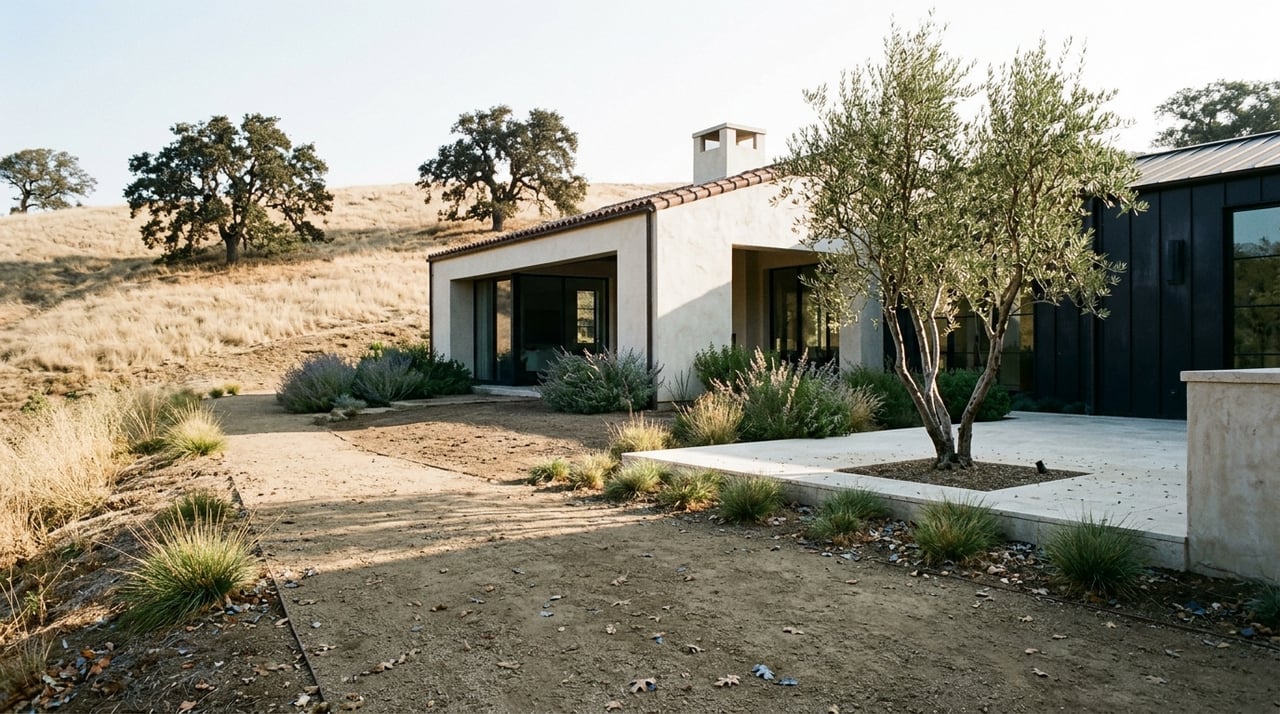
South of downtown, in a valley once known as the McCosker Ranch, sits Wilder, Orinda's newest neighborhood and the closest thing the city has to a controlled experiment in this question. The City of Orinda's planning page describes a Planned Development approved for 245 home sites, with construction now nearly complete, on roughly 200 of the community's more than 1,500 total acres. The rest was set aside as permanent open space and trails. Brooks Street served as master developer, with Hart Howerton as master planner and architect since 2006, and the first Development Agreement dates back to 1994. As of the city's last published update in November 2023, construction had wrapped on 230 of the approved lots, with the remaining handful filling in since.
The part that matters for a 2026 buyer isn't the acreage. It's that Wilder's homes were designed, from the ground up, around current wildfire building standards: substantial defensible space around every structure, ignition-resistant roofing, and roads engineered wide enough for two-way traffic and fire equipment. A 1970s hillside home in Orinda wasn't built to any of that. It was built to the code that existed decades before insurers started pricing wildfire risk the way they do now.
The Line Item That Changes the Comparison
Here's why that construction difference has turned into a pricing variable and not just an aesthetic one. Starting this October, FAIR Plan rates are set to rise across California, and reporting has singled out Orinda for some of the steepest increases, with premiums here expected to climb by an average of 31 percent. For homeowners already leaning on the FAIR Plan because private carriers won't write them, that's not a rounding error. It's thousands of dollars a year, on top of a policy that only covers fire and smoke and typically has to be paired with a separate policy for everything else.
None of this is new to Orinda specifically, but Orinda has been at the center of it since the private market started pulling back. The City of Orinda's own insurance resource page exists because so many residents were caught by non-renewals with little warning, and the city has kept a running FAIR Plan explainer for exactly that reason. A hillside home with an aging shake roof and minimal defensible space is now competing for buyers against a nearly identical square footage in Wilder where the insurance conversation is, by design, a shorter one.
That doesn't mean older Orinda homes are uninsurable. It means the diligence period looks different depending on which street you're on, and a buyer who assumes insurance is a formality because the price fits their budget is the buyer most likely to lose three weeks of escrow to a quote that never comes back.
Same City, Different Underwriting Conversation
A neighborhood-level breakdown from spring 2026 makes the split visible even before insurance enters the picture. Northeast Orinda's median sale price hit $2.3 million in a recent monthly read, up 53 percent year over year, moving in about 9 days. Northwest Orinda, more exposed hillside terrain, showed a $2.45 million median, up nearly 17 percent, but took over 30 days to sell. Orinda Woods posted a $2 million median over the three months ending May 2026, down 4.4 percent from the same period the year before, even as its price per square foot climbed 75 percent, a sign that smaller, well-positioned homes are absorbing more of the demand than larger ones. Orinda Downs told the opposite story over that same three-month window: a $2.33 million median, down 23 percent year over year, on some of the fastest sales in the city at 7 days. Downtown Orinda, by contrast, sat in the 38-day range with homes selling slightly under list.
| Sub-area | Recent median sale | Year-over-year | Typical time on market |
|---|---|---|---|
| Northeast Orinda | $2.3M | +53% | 9 days |
| Northwest Orinda | $2.45M | +17% | 30.5 days |
| Orinda Woods | $2.0M | -4.4% | 3-month window |
| Orinda Downs | $2.33M | -23% | 7 days |
| Downtown Orinda | mid-$1M to $2M range | mixed | 38 days |
No single row explains the market. Read together, they show a city where price direction has decoupled from speed, and where the fastest-moving pockets aren't necessarily the ones with the biggest year-over-year gains. That's a market where a buyer needs a strategy tuned to a specific street, not a citywide average.
What Wilder Actually Costs You
Wilder isn't free of tradeoffs. A recent MLS snapshot put its median list price above $2.2 million, meaningfully higher than the citywide list median, and its homeowners association runs close to $9,000 a year. That HOA fee buys a private swim and fitness facility, community ballfields, and the maintained trail network across the preserved acreage, but it's also a predictable number on a closing statement, which is more than you can say for a wildfire insurance quote right now. Buyers weighing Wilder against an older Orinda neighborhood aren't just choosing a floor plan. They're choosing between a known annual cost and an unknown one.
What This Actually Means If You're Comparing Streets
The instinct when comparing Orinda neighborhoods is to lead with price per square foot and school boundaries. Those still matter, but in 2026 they're not the variable most likely to blow up a transaction. Insurance is. A property that looks like the better deal on a spreadsheet can become the harder close if a lender can't get proof of coverage before funding, and that risk sits disproportionately on older, less fire-hardened homes in the same city where newer construction was engineered to answer exactly that question.
If you're actively comparing Orinda properties, the move is to get an insurance quote in hand during your inspection period, not after you've removed contingencies. Ask when the roof was last replaced and what defensible space work has been done. Treat a HOA fee at Wilder or Orindawoods as a known cost you can compare directly against an unknown insurance premium on an older parcel. The home that costs less on day one isn't automatically the home that costs less to own.
Downtown still gives you the reasons people fall for Orinda in the first place. The Orinda Theatre has been running its shark-fin marquee since 1941, and its handful of surrounding blocks hold Casa Orinda, the Fourth Bore Taproom and Grill, and a short walk of other restaurants that make the BART-adjacent core feel like an actual town center rather than a commute stop. That character isn't going anywhere. What's changed is that the cost of protecting it, literally, now varies enough by block to belong in the same conversation as price.
A Few Questions Worth Asking Before You Tour
Is Wilder actually easier to insure than the rest of Orinda? Its construction standards, built-in defensible space, and fire-resistant materials tend to make for a more straightforward underwriting conversation than older hillside stock, though every carrier still evaluates the specific parcel.
Why do Redfin, Zillow, and active-listing sites show different Orinda medians? They're measuring different pools. Closed-sale data reflects what buyers paid and skews toward homes that moved quickly. Active-listing averages include homes that have been sitting, which in this market often means properties still working through insurance-related delays.
Does the FAIR Plan cover everything a standard policy would? No. It generally covers fire and smoke only, which is why most Orinda homeowners on the FAIR Plan pair it with a separate policy for the rest.
If you're trying to figure out which Orinda street actually fits your budget once insurance is part of the math, that's the kind of comparison Roh Habibi and The Habibi Group work through with clients every week. Book a Confidential Real Estate Consultation and we'll walk the numbers, street by street, before you fall for a floor plan.