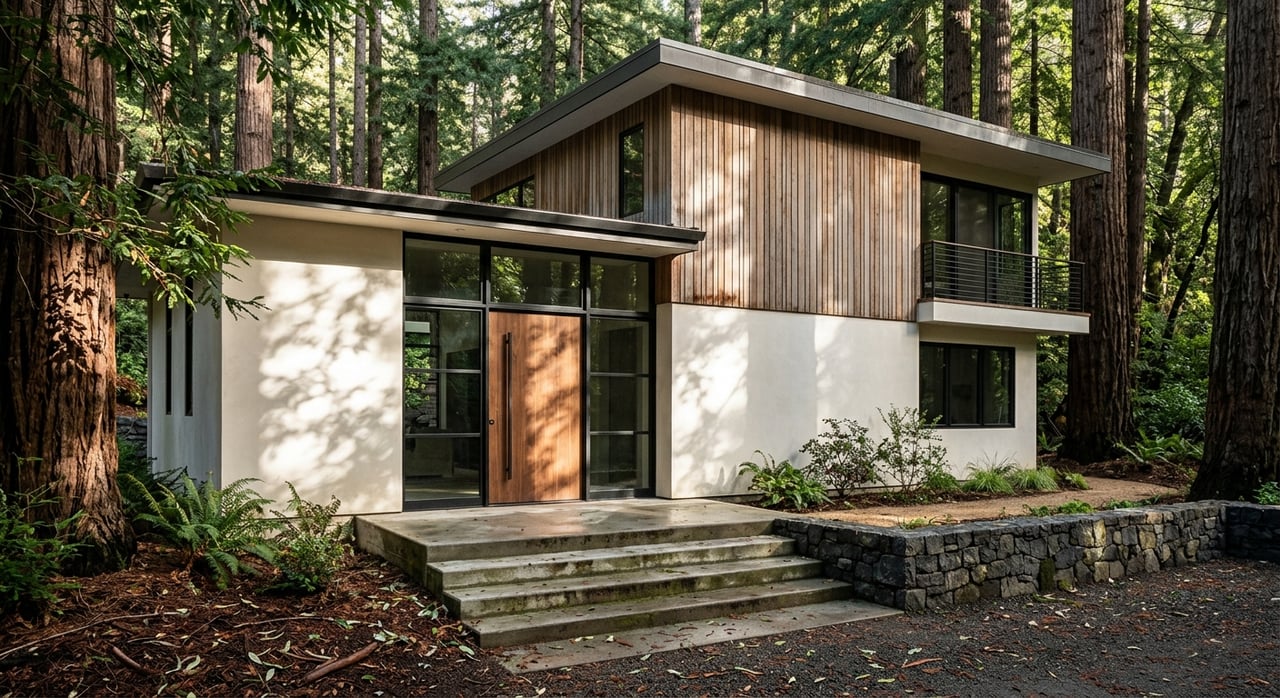
If you want redwood trails, a true neighborhood feel, and practical access to San Francisco, Mill Valley stands out for a reason. Many buyers assume they have to choose between daily connection to nature and a workable Bay Area commute, but Mill Valley is built around both. Understanding how that balance works can help you decide whether this part of Marin fits your lifestyle, priorities, and long-term plans. Let’s dive in.
Why Mill Valley Feels Different
Mill Valley is small by design and by scale. The city has an estimated 2024 population of 13,904 across 4.78 square miles, which helps explain why it feels more intimate than many other Bay Area communities.
That smaller footprint is paired with a strong residential identity. City planning documents describe Mill Valley as a place shaped by its natural setting, and the housing pattern supports that impression, with residential areas made up largely of single-family homes and more concentrated multifamily housing closer to commercial areas and arterial streets.
The local numbers also help explain the city’s market position. Census data shows a median household income of $206,212, a median owner-occupied home value above $2,000,000, and a highly educated population, with 75.8% of adults age 25 and older holding a bachelor’s degree or higher.
Nature Is Part of Daily Life
In Mill Valley, access to the outdoors is not just a weekend idea. The city has more than 175 original steps, lanes, and paths, creating an unusually rich pedestrian network for a city this size.
That network shapes how the city feels block by block. Instead of treating parks and trails as destinations you drive to once in a while, Mill Valley weaves walking routes, paths, and open space into everyday life.
Local parks add another layer to that experience. Bayfront Park includes a hiking and running trail, open grassy areas, picnic tables, and a soccer field, while Old Mill Park offers creek access, picnic areas, a playground, and an amphitheater.
Downtown Plaza supports that same rhythm in a more central setting. With benches, bathrooms, a café, and picnic tables, it functions as part of the city’s social and pedestrian fabric rather than just a formal civic space.
Big Outdoor Access, Close to Home
Mill Valley also sits close to some of the region’s best-known natural landmarks. Muir Woods National Monument is located in Mill Valley and offers six miles of trails that connect toward Mount Tamalpais State Park.
For many buyers, that proximity matters because it makes serious outdoor access feel immediate, not occasional. Muir Woods does require parking reservations for drivers, and the site has no cell service, which is useful to know if you are planning visits or hosting out-of-town guests.
The Dipsea Trail adds another layer of identity to the area. Beginning in Mill Valley, it climbs over Mount Tam, passes through Muir Woods, and descends to Stinson Beach, reinforcing the city’s connection to both forest and coastline.
City Access Still Works
What makes Mill Valley especially compelling is that all of this natural beauty does not mean isolation. Census data shows a mean travel time to work of 24.8 minutes, which supports the idea that the city remains closely tied to the wider Bay Area commute network.
For San Francisco commuters, Golden Gate Transit Route 114 is a key piece of the puzzle. This weekday-only commute route connects Mill Valley with San Francisco, with morning service toward the city running roughly from 6:15 a.m. to 8:55 a.m. and return service in the afternoon and evening running roughly from 3:00 p.m. to 7:50 p.m.
The route serves practical Mill Valley stops including Mill Valley Depot, Tam Junction, and Manzanita Park & Ride. On the San Francisco side, it reaches destinations including the Financial District and 4th & Folsom.
Park-And-Ride Makes Commuting Easier
Transit access in Mill Valley is not limited to one route. Golden Gate Transit also lists local park-and-ride options near Highway 101 and Shoreline Highway, including the Manzanita lot and the Pohono Street lot, both served by Route 114.
That matters if you want flexibility. Depending on where you live in Mill Valley, a park-and-ride setup may make commuting more practical than heading into the city entirely by car.
Marin Transit Route 17 broadens those connections. According to the city, it links Mill Valley with Sausalito, San Rafael, Larkspur/Corte Madera, and Strawberry, and it runs about every 30 minutes during peak weekday commute hours.
San Rafael Strengthens the Network
San Rafael plays an important supporting role in Mill Valley’s access story. Golden Gate describes the San Rafael Transit Center as Marin County’s regional transit hub, connecting bus, airporter, rail, and taxi services across San Francisco, Contra Costa, and Sonoma counties.
If you are comparing southern Marin locations, this is worth noting. Mill Valley is not only about access south toward San Francisco, but also about useful regional connectivity north and east through nearby San Rafael.
Ferry access adds one more option. Golden Gate Ferry operates daily service between Marin terminals such as Sausalito, Tiburon, and Larkspur and San Francisco, giving residents another way to reach the city by combining local driving or transit with water transit.
The Housing Mix Is More Varied Than Many Expect
A common assumption is that Mill Valley is only hillside single-family housing. In reality, the city’s housing stock is more mixed, even though detached homes remain the dominant form.
City profile data shows that 65.4% of the housing stock is detached single-family, 10.23% is attached single-family, 5.69% is in two-to-four-unit buildings, and 18.48% is in buildings with five or more units. For buyers, that means there may be options across different property types, especially in flatter areas and near commercial corridors.
Density also changes significantly depending on terrain. The General Plan notes that single-family density ranges from about one home per ten acres in remote hillside areas to about seven homes per acre on flatter land, while multifamily density generally ranges from about six units per acre for duplexes to 10 to 30 units per acre along Miller Avenue.
Micro-Areas Shape the Lifestyle
One of the most useful ways to understand Mill Valley is through its character areas. Downtown is described in the General Plan as a compact village core centered on Lytton Square and Depot Plaza, while Lower Miller Avenue functions as a full-service commercial area.
East Blithedale and Alto Center sit near the Highway 101 interchange and include a substantial commercial presence. Redwood Highway Frontage Road is more office- and freeway-oriented, which creates a different feel from the village-like core.
Residential micro-areas also vary in meaningful ways. Cascade and Blithedale Canyons are defined by narrow, winding roads, heavy tree cover, and homes screened by redwoods, while Sycamore and Tamalpais Park are flatter and more conventionally platted.
Other areas, such as Warner Canyon, Kite Hill, and Miller and Molino, blend residential, office, and commercial uses. That variation is one reason Mill Valley appeals to buyers with very different priorities, whether you value wooded privacy, walkable daily convenience, or easier access to commute routes.
Walkability Has a Local Character
Mill Valley’s version of walkability is not the same as a dense urban neighborhood. Instead, planning documents note that many residential neighborhoods sit near neighborhood shopping districts, allowing residents to reach daily needs on foot more easily than in many suburban communities.
That distinction is important when you are evaluating fit. You are not looking at an urban grid with uniform retail on every block, but you are looking at a community where local commercial areas and residential pockets often work together well.
This is also part of why Mill Valley feels balanced rather than split between two identities. Its village core, neighborhood shopping areas, local paths, and park system create a daily pattern where errands, coffee stops, and outdoor time can exist in the same routine.
A Practical Detail Buyers Should Check
There is one detail many buyers overlook at first. Some homes with a Mill Valley mailing address are actually outside city limits, including parts of Strawberry, Tam Valley, Homestead, Almonte, and Alto.
That matters because city boundaries can affect governance, permitting, and service considerations. If you are serious about a property, it is important to verify the exact jurisdiction rather than rely on the mailing address alone.
Why This Balance Appeals to Bay Area Buyers
Mill Valley’s strength is not simply that it has nature or that it has access to San Francisco. Its real advantage is that the city’s physical layout, housing structure, pedestrian fabric, and transit connections allow both to coexist in a way that feels practical.
For many Bay Area buyers, that combination is rare. You can have redwood-lined streets, local parks, and trail access close at hand without feeling cut off from San Francisco, San Rafael, or the broader southern Marin network.
If you are evaluating Mill Valley through a lifestyle and investment lens, the key is to look beyond the postcard version of the city. The real story is how different micro-areas, housing types, and commute patterns line up with the way you actually want to live.
If you are considering Mill Valley or comparing it with other Marin communities, Roh Habibi can help you evaluate the right fit with a strategic, design-forward, and discreet approach.
FAQs
How does Mill Valley balance nature and city access?
- Mill Valley combines close access to redwoods, trails, parks, and Mount Tamalpais with commute connections to San Francisco and the broader Bay Area through bus routes, park-and-ride lots, nearby ferry options, and access to the San Rafael regional transit network.
What public transit connects Mill Valley to San Francisco?
- Golden Gate Transit Route 114 provides weekday commute service between Mill Valley and San Francisco, with stops including Mill Valley Depot, Tam Junction, and Manzanita Park & Ride, along with San Francisco destinations such as the Financial District and 4th & Folsom.
What outdoor amenities are available in Mill Valley?
- Mill Valley offers more than 175 steps, lanes, and paths, along with local parks such as Bayfront Park, Old Mill Park, and Downtown Plaza, plus direct proximity to Muir Woods National Monument and the Dipsea Trail.
What kinds of homes are found in Mill Valley?
- Mill Valley includes detached single-family homes, attached homes, smaller multifamily buildings, and larger multifamily properties, with housing types and density varying based on terrain and proximity to downtown or commercial corridors.
Why does San Rafael matter for Mill Valley residents?
- San Rafael adds regional mobility because its transit center serves as Marin County’s hub for bus, airporter, rail, and taxi connections, making it part of the broader access network for Mill Valley residents.
Do all Mill Valley addresses fall inside city limits?
- No. Some properties with a Mill Valley mailing address are outside city limits, so buyers should confirm the property’s actual jurisdiction before making assumptions about permitting, services, or governance.